
Published October 27, 2026
If your 1992-1996 Corvette suddenly won't start, stumbles and backfires after a rainstorm, or cranks a long time before it fires, the Optispark distributor is one of the first parts to suspect. Every LT1 and LT4 C4 uses one, and it sits in a tough spot: low on the front of the engine, behind the water pump and crankshaft balancer. This guide explains how the Optispark works, why it fails, how to tell a bad one from other faults, which version your car needs, and what to replace while you're in there.
Quick Answer
- The usual cause is moisture or coolant. The water pump sits directly above the Optispark, so a pump that starts leaking from its weep hole drips coolant straight onto it. Water from puddles, pressure washing or condensation does the same kind of damage.
- Typical symptoms are a sudden no-start or stall, misfires and backfiring (often worse in wet weather), a long crank before the engine starts, and trouble codes 16 or 36 (1992-1995) or P1371, P0372 or P0323 (1996).
- 1992-1994 cars use a non-vented unit and 1995-1996 cars use a vented one. They are not interchangeable without changing the cam drive parts, so buy the version that matches your year.
- Replace the water pump at the same time. Both jobs share most of the same labor, and a tired pump is the most common thing that kills a new Optispark.
Which Corvettes Are Affected?
Every 1992-1996 Corvette with the LT1 engine, and the 1996 LT4 (Grand Sport and manual-transmission cars), uses an Optispark. The 1990-1995 ZR-1 does not: its LT5 engine uses a distributorless coil system. Check the engine RPO code (LT1, LT4 or LT5) on your Service Parts Identification label if you are not sure. Our C4 Corvette RPO codes guide lists them, and our guide on where to find the RPO code label shows where to look.
| Model Years | Engine | Optispark Type | GM Distributor Number | Trouble Codes | Notes |
|---|---|---|---|---|---|
| 1992 | LT1 | Non-vented | 19212299 | 16, 36 | Early cars were covered by GM campaign 92C11. The harness is unique to 1992. |
| 1993-1994 | LT1 | Non-vented | 19212299 | 16, 36 | Same distributor as 1992, different harness. |
| 1995 | LT1 | Vented (vacuum hoses) | 19212300 | 16, 36 | First vented year. Some cars got a vent hose reroute under GM campaign 95-C-38. |
| 1996 | LT1 and LT4 | Vented (vacuum hoses) | 19212300 | P1371, P0372, P0323 | First OBD-II year, so a standard OBD-II scan tool reads the codes. |
The vented unit came in with a different front cover, cam drive and cam dowel in 1995. A 1995-1996 Optispark won't bolt onto a 1992-1994 engine without those parts, so always match the unit to your model year.
Symptoms of a Failing Optispark
- Sudden no-start or stall. If the computer loses the low-resolution signal, it cannot fire the plugs or injectors, and the engine quits or won't start at all. There is no backup mode.
- Long cranking before it fires. A missing high-resolution signal lets the engine run, but it takes longer to start and may not run as well.
- Misfire, backfire or bucking, often after rain, a car wash or a puddle, and sometimes clearing up once the engine dries out. Moisture in the cap lets spark jump to the wrong terminal, a lot like a cracked cap on an older distributor.
- Rough idle, hesitation or a fuel smell from crossfire and unburned fuel.
- Coolant on the front of the engine below the water pump, or a sweet smell after shutdown. This is a warning sign rather than an Optispark symptom, but it is often the cause.
- The Service Engine Soon light with one of the codes listed above.
How the Optispark Works
The Optispark is a cam-driven distributor mounted on the front cover, behind the water pump. It does two jobs at once:
- Timing signals: a thin slotted disk spins between two optical sensors. The outer track has 360 slots and gives the engine computer a high-resolution signal for precise spark timing. The inner track has 8 slots of different lengths and gives a low-resolution signal that identifies cylinder position.
- Spark delivery: a separate ignition coil sends high voltage to the cap, and a rotor under the cap passes it to each plug wire, just like a traditional distributor.
Because the delicate optics and the high-voltage cap and rotor share one small housing, anything that gets inside, whether water, coolant or oil, upsets both the signals and the spark.
Why Optisparks Fail
Water Pump Leaks
The LT1 water pump is driven by a shaft from the cam gear and sits right on top of the Optispark. When the seal inside the pump starts to wear, coolant escapes through a small weep hole on the bottom of the pump, which is directly above the distributor. Owners on CorvetteForum report that their pumps almost always started leaking through the weep hole before failing outright. A few drops after shutdown is enough to start the damage, and unlike rainwater, coolant doesn't dry out cleanly.
Moisture and the Non-Vented Design
The 1992-1994 unit has no active venting. It breathes through small weep holes at the base, so a hot distributor that gets splashed with cold water can draw moisture in as it cools. GM added a vacuum vent system for 1995: fresh air from the intake duct is pulled through the distributor by engine vacuum, which keeps condensation out. Owners say the vented unit is much better with condensation, though it still won't survive a direct soaking.
A Broken or Blocked Vent System (1995-1996)
GM's service information warns that an inoperative vent system can cause early distributor failure. A cracked or disconnected hose, a check valve or filter installed backwards, or a leaking cap seal stops the airflow. On a range of 1995 cars, GM campaign 95-C-38 found that the vent harness could rub on the power steering pulley until it wore through. Dealers fixed it by strapping the harness away from the pulley.
The 1992 Campaign
GM campaign 92C11 covered some early 1992 LT1 Corvettes whose Optispark could lose its low-resolution signal, causing a no-start or stall with Code 16. Dealers replaced the distributor. If you own a 1992, it is likely that this was done long ago, but it shows how a fault in this one signal stops the car.
Age, Heat and Wear
Even a dry Optispark wears out. Owners report burned or cracked rotors, loose rotor screws and caps damaged by heat, and the optical sensor can fail with age. Bad plug wires make things worse by raising the voltage the cap and rotor have to handle.
How to Diagnose It
Step 1: Read the Codes
The codes tell you which signal dropped out. On 1992-1995 cars, which use GM's earlier OBD-I system, you need a code reader or scan tool that supports those years. 1996 cars work with any OBD-II scan tool.
| Code | Years | What It Means | How the Car Behaves |
|---|---|---|---|
| 16 | 1992-1995 | Low-resolution signal missing | No-start or stall |
| 36 | 1992-1995 | High-resolution signal missing | Runs, but cranks longer and may run poorly |
| P1371 | 1996 | Low-resolution (4X) signal missing | Engine will not run |
| P0372 | 1996 | High-resolution (180X) signal missing | Runs, with extended cranking |
| P0323 | 1996 | Intermittent low/high-resolution signal | Possible misfire; may not turn on the check engine light |
A misfire code alone (P0300 on 1996 cars) doesn't prove the Optispark is bad. Plug wires, plugs, the coil and injectors can cause the same thing.
Step 2: Rule Out the Easy Stuff
- Check the distributor connector and harness. The 4-wire, shielded harness runs from the Optispark to the computer. A corroded connector or chafed wire can set the same codes as a bad distributor.
- Check the coil and plug wires. A cracked coil or a wire arcing to the block causes misfires that feel just like a wet Optispark. When removing wires, GM says to twist the boot and pull. Never pierce a wire to test it.
- Check the grounds and the battery. Low cranking voltage can make any ignition fault look worse.
Step 3: Look for Coolant
With a flashlight, check the bottom of the water pump and the top of the Optispark for coolant trails, crusty residue or wetness. If the pump is weeping, plan on replacing it whether or not you replace the distributor.
Step 4: Check the Vent System (1995-1996)
Follow the vent hoses from the air intake duct to the distributor and from the distributor to the vacuum source. Look for cracks, loose ends, or a check valve or filter facing the wrong way. GM's test uses a hand vacuum pump to see whether the distributor holds about 10 inHg. If it leaks down, check the cap seal and the housing for cracks.
Fix Options
1. Replace the Optispark
If the codes point to a lost signal, or coolant got inside, replacing the unit is the reliable fix. Our used C4 Optispark distributor is sold in 1992-1994 (non-vented, GM 19212299) and 1995-1996 (vented, GM 19212300) versions. Price at time of writing: $125. Both versions are currently out of stock, but you can join the waitlist.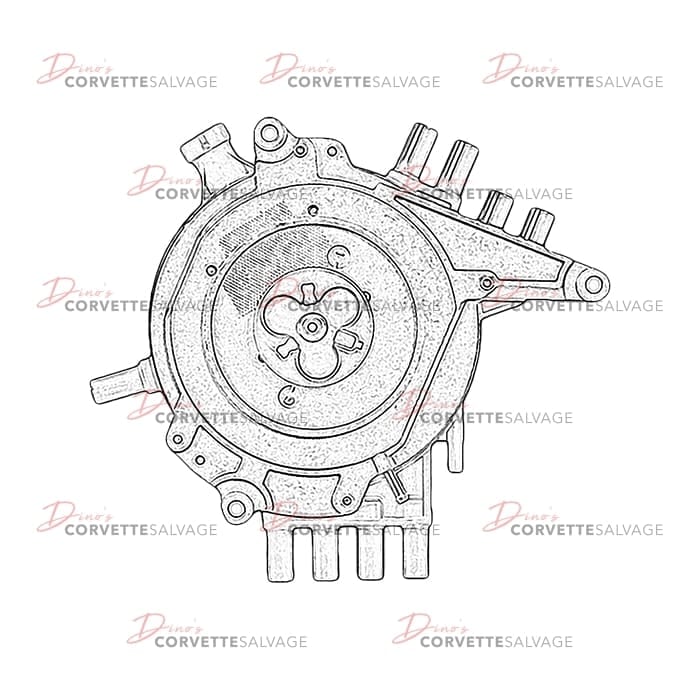
- Buying used? Our tips on buying used Corvette parts explain how to check a part before you install it.
- We also sell new distributors for both versions: the new 1992-1994 non-vented distributor ($177.99, currently out of stock) and the new 1995-1996 vented distributor ($177.99, in stock).
- If the harness is chafed or the connector is corroded, replace it at the same time. We carry a used Optispark wiring harness in 1992, 1993-1994 and 1995-1996 versions ($25-$40), and a new 1992-1994 harness ($54.99).
2. Replace the Water Pump at the Same Time
The pump has to come off to reach the Optispark anyway, so replacing it now saves doing the job twice. The 1992 pump is different from the 1993-1996 pump, so order by year: the new 1992 LT1 water pump ($189.99) or the new 1993-1996 LT1/LT4 water pump ($240.99), both currently out of stock with a waitlist. Our used C4 water pump listing ($45) has the 1992 LT1 pump in stock at time of writing.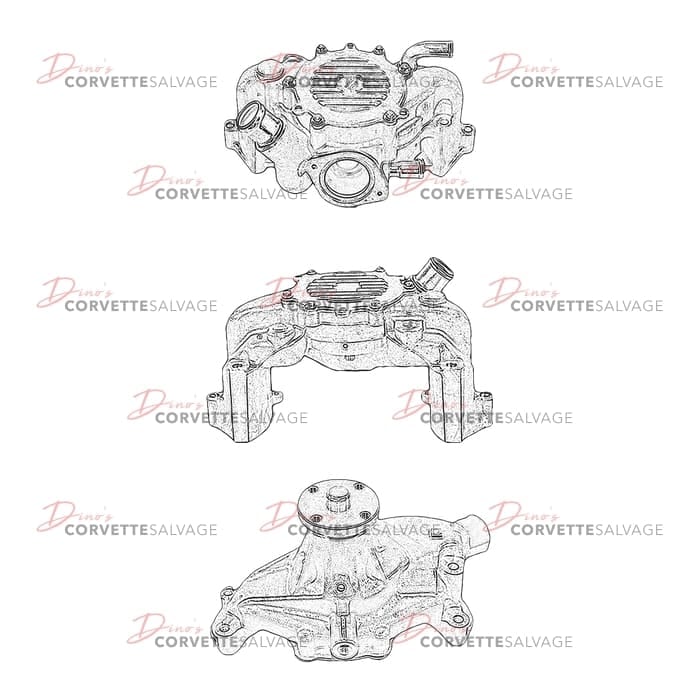
Some owners add a short drain tube to the pump's weep hole so a future leak drips onto the ground instead of the distributor. It is a common forum upgrade, not a GM fix, so do it carefully if you try it.
3. Replace the Cap and Rotor
The two versions use different cap and rotor kits. The 1992-1994 non-vented unit takes GM 10457735 (ACDelco D327A), and the 1995-1996 vented unit takes GM 10457212, 10457293 or 10474670, so order by year. We carry new kits for both: the 1992-1994 non-vented cap and rotor kit ($149.99) and the 1995-1996 vented cap and rotor kit ($119.99), both in stock at the time of writing. Some owners replace the cap and rotor every 30,000-60,000 miles as maintenance. GM's own guidance is more cautious: some discoloration and whitish residue inside the cap are normal, and the cap and rotor only need replacing if the car runs poorly. A new cap and rotor won't fix a failed optical sensor, so if you have code 16, 36, P1371 or P0372, replace the whole unit. GM has discontinued 10457735, so our kits are new reproductions rather than GM parts.
4. Fix the Vent System (1995-1996)
Replace any cracked vent hoses, make sure the check valve and filter face the right way, and keep the harness away from the power steering pulley. This costs little and protects a new distributor.
5. Other Parts to Have on Hand
- Balancer: the crankshaft balancer must come off to reach the Optispark. If yours shows a slipped or cracked rubber ring, replace it now: new LT1 harmonic balancer ($395, in stock) or used LT1 harmonic balancer ($150, currently out of stock). On 1992-1995 cars, see also the new LT1 balancer hub ($201.99) and used LT1 balancer hub ($134), both currently out of stock.
- Coil: a weak coil is a cheap thing to rule out. We have the used LT1 ignition coil ($10, in stock) and a new 1992-1995 ignition coil ($44.99, currently out of stock).
- Plug wires: old wires are hard on a new cap and rotor. See the 1992-1995 spark plug wire kit ($72.99) and the 1996 spark plug wires ($94.99), both currently out of stock.
- Gaskets and coolant: new water pump gaskets, and enough coolant to refill the system. 1996 cars use DEX-COOL.
What the Replacement Involves
This is a big job for a home mechanic, but it's doable with patience. GM's procedure, in short:
- Disconnect the battery and drain the coolant.
- On 1995-1996 cars, inspect the vent system first so you know whether it contributed to the failure.
- Remove the drive belt and tensioner, then the water pump. Clean up any spilled coolant before going further.
- Remove the crankshaft balancer, then the plug wires, the 4-wire connector, the vent hoses (1995-1996) and the three distributor bolts.
- Line the new distributor up with the cam drive pin and seat it by hand. It must sit flush on its own. Never pull it into place with the bolts. Then tighten the bolts lightly: GM lists only about 8-9 lb-ft.
- Grease the water pump drive coupling, fit new pump gaskets and tighten the pump bolts to 30 lb-ft.
- Reinstall the balancer and the belt, refill and bleed the cooling system, and clear the codes.
Shops quote this as a multi-hour job, mostly because of the parts that have to come off first, so it pays to do the pump, wires and any vent hoses at the same time.
Frequently Asked Questions
Can I put a 1995-1996 vented Optispark on my 1993 Corvette? Not directly. The vented unit uses a different cam drive, cam dowel and front cover, so it won't fit a 1992-1994 engine without those parts. Most owners stick with the correct non-vented unit and replace the water pump with it.
Is the Optispark the same on 1992 and 1993-1994 cars? The distributor is the same GM number, but the wiring harness differs between 1992 and 1993-1994, so check the harness when you order.
My car only runs badly in the rain. Is the Optispark bad? Possibly not yet. Moisture in the cap can cause misfires that go away once it dries, but repeated soakings shorten its life. Check the plug wires, the water pump weep hole and, on 1995-1996 cars, the vent hoses.
Does a ZR-1 have an Optispark? No. The LT5 engine in the 1990-1995 ZR-1 uses a distributorless ignition system.
Should I pressure wash my engine bay? Avoid spraying the front of the engine. Owners have reported Optispark failures after power washing and even after drive-through car wash dryers.
The Optispark isn't the only C4 part that wears out with age. See our guide to C4 and C5 headlight motor failure for another common fix.
Sources
- GM service information, 1996 Corvette: DI system description, ignition system description, distributor vent system check, distributor replacement and distributor disassembly.
- GM service information, 1996 Corvette: water pump replacement.
- GM Product Campaign 92C11, 1992 Corvette LT1 Optispark distributor replacement: GM campaign 92C11
- GM Product Campaign 95-C-38, 1995 Corvette distributor vacuum vent harness: GM campaign 95-C-38
- GM parts catalog: distributors 19212299 and 19212300, cap and rotor kits 10457735 (1992-1994) and 10457212, 10457293 or 10474670 (1995-1996), water pumps 12529560 (1992) and 12527739 (1993-1996).
- Owner experience: CorvetteForum vented Optispark guide, CorvetteForum Optispark preservation thread and CorvetteForum LT1 water pump thread.
- MotorTrend LT1 ignition article.