
Published October 26, 2026
If your 2015-2019 Corvette shakes like it is rolling over rumble strips at highway speed, hesitates going into gear after sitting overnight, or bangs through the low gears, you are not alone. The eight-speed automatic, which owners call the "A8" and GM calls the Hydra-Matic 8L90, is the most discussed weak point of the C7. Most of these complaints have known causes, and several have GM-documented fixes. This guide explains what goes wrong, how to tell the problems apart, what GM's own bulletins say, and what to do when the transmission is beyond saving.
Quick Answer
- The shudder at light throttle between roughly 25 and 80 mph is usually torque converter clutch (TCC) shudder. GM's fix is a full fluid exchange to Mobil 1 Synthetic LV ATF HP under bulletin 18-NA-355. It is not a transmission replacement.
- A delay going into Drive or Reverse after the car has sat on early 2016 and older cars is covered by bulletin 16-NA-014. That fix is a revised stator shaft support with an extra check ball, which stops fluid from draining out of the torque converter.
- Harsh or clunky shifts are usually addressed with transmission control software updates. Results vary from car to car.
- If the transmission or torque converter has actually failed, your options are a dealer or shop rebuild, a new or remanufactured unit, or a good used 8L90.
- There is no NHTSA safety recall for the C7 8-speed. A class action over GM's 8-speed transmissions has been in court since 2019 and has not been settled.
Which Years Are Affected?
| Model year | Automatic transmission | What to know |
|---|---|---|
| 2014 | 6-speed automatic (RPO MYC) | Not an 8L90. The problems in this guide don't apply. |
| 2015-2016 | 8L90 (RPO M5U) | Cars built before October 27, 2015 are covered by bulletin 16-NA-014 for delayed engagement. All are covered by the shudder bulletin. |
| 2017-2019 Stingray, Grand Sport and Z06 | 8L90 (RPO M5U) | Covered by the shudder bulletin (18-NA-355) if built before February 1, 2019. GM says cars built after that date left the factory with the updated fluid. |
| 2019 ZR1 | 8L90 (RPO M5U) | The shudder bulletin lists only LT1 and LT4 engines, so the LT5-powered ZR1 is not named. Diagnose a ZR1 with GM's normal service procedures. |
The 8L90 arrived for the 2015 model year. GM said it shifted faster than the outgoing six-speed and improved fuel economy. You can check whether your car has M5U on the RPO label in the glovebox, or look it up in our 2015 Corvette RPO codes list.
Symptoms
A8 owners usually report one or more of these:
- Shudder or shake at a steady, light throttle between about 25 and 80 mph, when the transmission isn't shifting. GM's bulletins describe it as feeling like driving over rumble strips or rough expansion joints. Many owners first blame tire balance.
- Delayed engagement. You shift from Park to Drive or Reverse after the car has sat for several hours or overnight, and nothing happens for a moment. Then it engages, sometimes with a thump. It works normally for the rest of the day.
- Harsh, clunky or slow shifts, especially on the 1-2 and 2-3 shifts or when the car is cold. Some owners also describe a lurch on downshifts as the car slows.
- Surging or RPM hunting at a steady cruise, which can point to a torque converter clutch that is slipping and grabbing.
- Slipping, flaring between gears or loss of drive, which points to real internal damage.
- A warning message, reduced power or limp mode, often with transmission trouble codes stored.
What Causes A8 Problems
Torque Converter Clutch Shudder and the Fluid
The 8L90 uses a torque converter clutch that slips by a controlled amount as it locks up. When the fluid's friction properties drift, the clutch grabs and releases rapidly instead of slipping smoothly, and you feel that as shudder.
GM's first fix, bulletin 16-NA-175, used a triple flush with an earlier DEXRON HP fluid. The later bulletin, 18-NA-355 (released January 2019 and revised through April 2020), moved to a new blue-label Mobil 1 Synthetic LV ATF HP fluid and a three-cycle exchange procedure.
In the class action described below, a federal appeals court summarized the record this way: the shudder was tied to the original fluid's sensitivity to moisture. GM then developed a moisture-resistant fluid in December 2018 and told dealers to fix shudder complaints by flushing to it.
Torque Converter Drain-Back
On early cars, fluid could drain out of the torque converter and back into the pan while the car sat. The next time you shifted into gear, the transmission had to refill the converter before it could engage, which caused the delay.
Bulletin 16-NA-014 covers 2015-2016 Corvettes built before October 27, 2015. The correction is a new stator shaft support assembly with a second check ball, and it means removing the transmission to reach the part.
Shift Quality and Software
Harsh shifts are a separate issue from shudder. Dealers have commonly treated them by reprogramming the transmission control module, often called a "reflash." Many owners report that a reflash improved their shifts. Others say the improvement didn't last, or that their car still shifts firmly when cold.
Hardware Failures
Owners on CorvetteForum have tracked torque converter and transmission replacements since 2016. Their reports point most often to torque converter problems, especially on early 2015 cars. That data is self-reported, so treat it as a sign of what to check, not a failure rate.
Low or incorrect fluid, overheating and contaminated fluid (water or coolant) can also damage any 8L90.
How to Diagnose It
- Rule out the easy look-alikes. Out-of-balance or flat-spotted tires, a bent wheel, worn driveline parts or an engine misfire can all feel like shudder. GM's shudder bulletin warns that not every shudder complaint is caused by the torque converter clutch.
- Check the conditions. True TCC shudder shows up at light, steady throttle, roughly 25 to 80 mph, when the transmission isn't shifting. If the vibration rises and falls with road speed or engine speed, it probably isn't the converter.
- Have the TCC tested. GM's procedure in bulletin 16-NA-175 uses a scan tool to command the torque converter clutch fully open and then fully locked. If the shudder goes away in both states, the cause is TCC shudder. If it stays, look elsewhere.
- Check the service history. Ask whether the car has already had the 18-NA-355 fluid exchange. GM says the procedure should be done only once per vehicle. A car that shudders again afterward should be diagnosed normally rather than flushed again.
- Check the fluid level the correct way. The 8L90 has no dipstick. The level is set at a check plug in the pan, with the engine running in Park and the fluid between 95 and 113°F (35 to 45°C). A hotter reading leaves it underfilled, and a cooler one leaves it overfilled.
- Test for delayed engagement. After the car sits overnight, shift into Drive and Reverse and note any delay. On a 2015-2016 car, check the build date against the October 27, 2015 breakpoint in 16-NA-014.
- Scan for codes and ask about updates. Stored transmission codes and the current software calibration tell a dealer or shop whether an update is due or whether there is a hardware fault.
Fix Options Compared
1. The GM Fluid Exchange (18-NA-355)
For confirmed TCC shudder, this is the first and cheapest fix. For the Corvette, the bulletin calls for three complete drain-and-fill cycles of the pan using GM's fluid exchange machine, which is loaded with 24 quarts of Mobil 1 Synthetic LV ATF HP (GM part number 19417577, U.S. quart).
GM warns that mixing in other fluids or additives dilutes the new fluid and won't give good results. GM says the shudder should be noticeably better right after the exchange, but full results can take up to 200 miles and two cold-to-hot drive cycles.
A shop can do the exchange if it follows the published procedure and uses the correct fluid. A simple drain and fill leaves too much old fluid in the converter and cooler.
2. Software Updates
For harsh or inconsistent shifts, ask a dealer to check whether a newer transmission control calibration is available. It is quick and cheap compared with hardware repairs. Set realistic expectations, though: updates often improve shift quality, but they don't always remove every clunk.
3. Torque Converter or Internal Repair
Both delayed engagement on early cars and a failed torque converter mean removing the transmission. For the delay, the work is the stator shaft support update in 16-NA-014. For a failed converter, it is a converter replacement, often with new seals.
If the converter is the problem, we carry used factory GM torque converters, and they are engine-specific: the Stingray and Grand Sport (LT1) use GM 24290213, our C7 8-speed torque converter for the Stingray and Grand Sport, while the Z06 and ZR1 (LT4 and LT5) use GM 24290212, our Z06 and ZR1 8-speed torque converter. Match the part number to your engine before you order.
The C7's transmission is mounted at the rear of the car as part of the rear transaxle, so this is a big labor job. Get the diagnosis confirmed before you pay for it.
4. Replace It With a Used 8L90
If the transmission has internal damage, such as slipping, metal in the pan or repeat failures, a replacement unit is often the most practical fix. A good used C7 8-speed automatic transmission (2015-2019) costs far less than a new one.
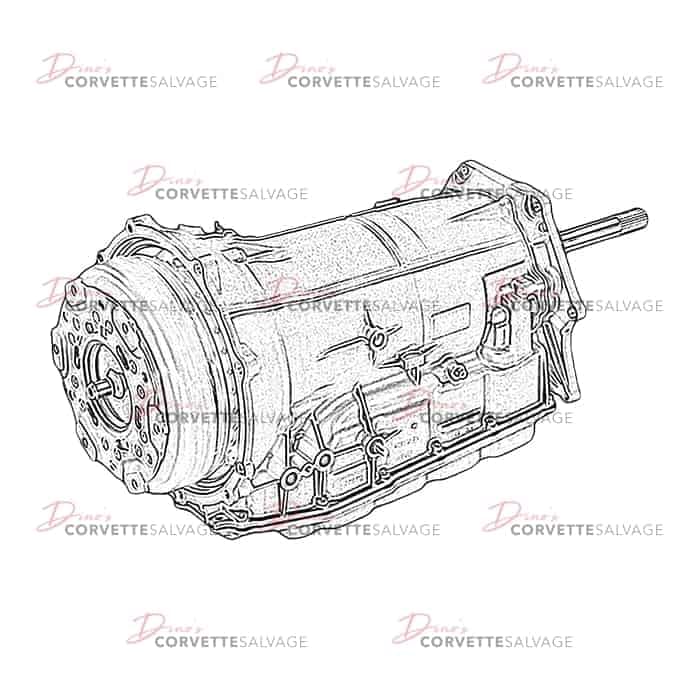
When you install any replacement, do the fluid fill with the current Mobil 1 Synthetic LV ATF HP, set the level at the correct temperature, and make sure the software calibration is up to date.
Price at time of writing: $2,200. It was out of stock when we checked, so ask about availability.
5. Cooling System Parts
Fluid temperature matters for any automatic, and a leaking or damaged cooler can starve the transmission. We list a used C7 automatic transmission oil cooler and a rear auxiliary transmission fluid cooler (2015-2019) for cars that need them.
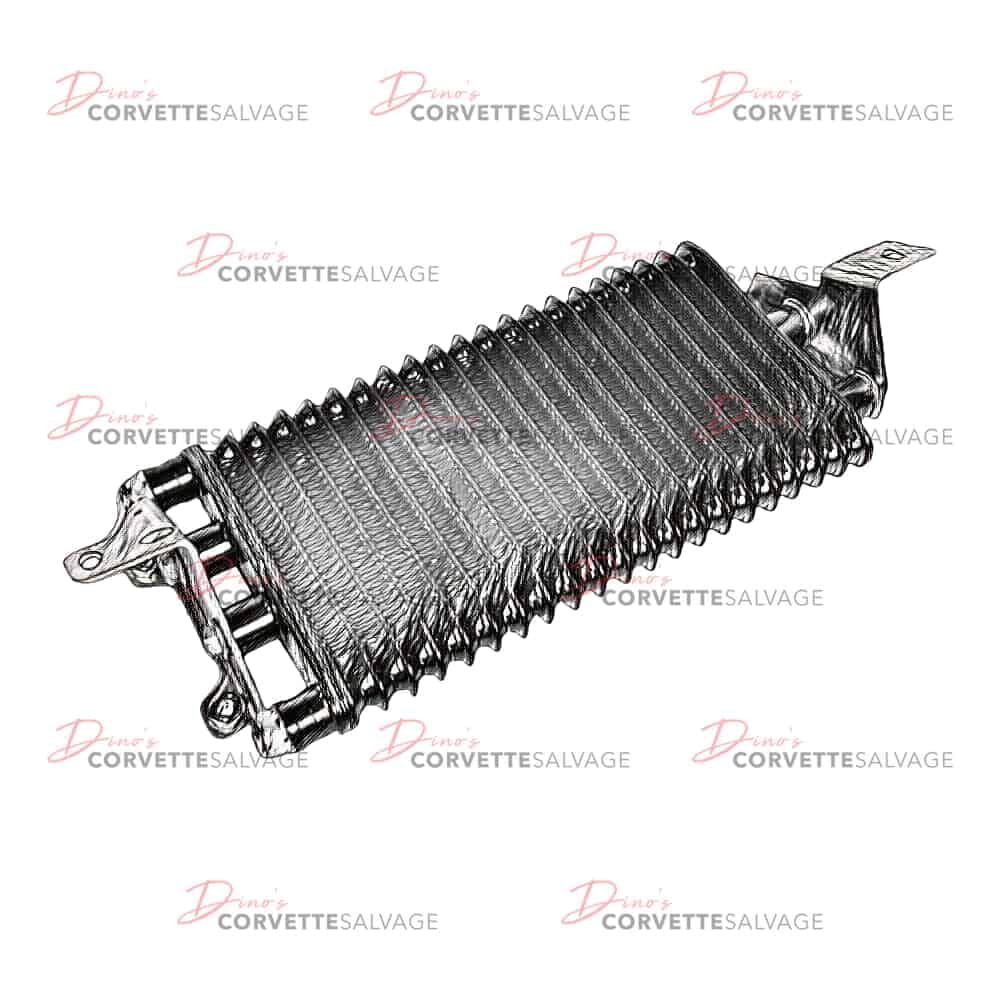
Price at time of writing: transmission oil cooler $135, rear auxiliary cooler $125. Both were out of stock when we checked.
Which Fix Should You Choose?
- Shudder at steady light throttle, and no flush on record: Get the TCC test, then the 18-NA-355 fluid exchange.
- Shudder that came back after the exchange: Have the car properly diagnosed. Don't just flush it again.
- Delay into gear after sitting (2015-2016): Check the build date against 16-NA-014 and ask whether the stator support update was done.
- Harsh shifts only: Start with a software update.
- Slipping, metal in the pan or repeated failures: Plan on a converter or transmission replacement. A used 8L90 is usually the best-value route.
What About the Class Action?
Owners filed a class action against GM in 2019 over shudder and harsh shifting in 8-speed vehicles. The case is Speerly v. General Motors in the Eastern District of Michigan. The district court certified 26 state subclasses covering 2015-2019 vehicles with the 8L transmissions, roughly 800,000 buyers.
On June 27, 2025, the full Sixth Circuit Court of Appeals vacated that class certification and sent the case back to the district court. The court docket shows the case still pending there in 2026. As of this writing we are not aware of any settlement or claims process. If you think you may be affected, check the court record or talk to an attorney. This guide is not legal advice.
Frequently Asked Questions
Is the C7 A8 transmission reliable? Many A8 cars run without trouble, especially once they have the updated fluid. The common problems are well documented, though, so check the service history before you buy one.
Was there a recall for the C7 8-speed transmission? No. We found no NHTSA safety recall for the 2015-2019 Corvette transmission. GM handled the shudder with service bulletins, not a recall.
Can I just change the fluid myself? You can, but GM's fix depends on getting almost all of the old fluid out, which a single drain and fill won't do. If you do it yourself, use only Mobil 1 Synthetic LV ATF HP, follow the multi-cycle procedure, and set the level at the correct temperature.
How much transmission fluid does a C7 A8 take? GM's bulletin calls for 24 quarts for the full three-cycle Corvette exchange. That is not the fill capacity. For a normal service, set the level at the check plug with the fluid at 95 to 113°F.
Does a 2019 Corvette have the shudder problem? GM says cars built after February 1, 2019 were already built with the updated fluid. Earlier 2019 builds are included in the bulletin.
Will a used transmission need programming? Expect to have the transmission control software checked and updated after installation, and have any adaptive values reset or relearned per GM's procedure.
Sources
- GM service bulletin 18-NA-355, "Shake and/or Shudder During Light Throttle Acceleration Between 25 and 80 MPH at Steady Speed," version 6, April 2020 (filed with NHTSA).
- GM service bulletin 16-NA-175, TCC shudder, August 2017 (filed with NHTSA).
- GM service bulletin 16-NA-014, "Delayed Engagement After Sitting With Engine Off," July 2016 (filed with NHTSA).
- NHTSA recall search for 2015-2019 Chevrolet Corvette found no transmission recall.
- Speerly v. General Motors, LLC, No. 23-1940 (6th Cir. June 27, 2025) (en banc).
- GM press release, "New 8-Speed Enables Quicker, More Efficient Corvette."
- Speerly v. General Motors, LLC, No. 2:19-cv-11044 (E.D. Mich.).
- CorvetteForum, "A8 Transmission failure tracking."
- CorvetteForum, "A8's and Torque Converter failure."
- Corvette Dan (YouTube), "C7 Corvette: Avoid A8 8SP Auto Trans Issue, Avoid Costly Repairs."