
Published November 3, 2026
You turn the key on your C5 and nothing happens. The dash lights up, the radio plays, and the starter doesn't make a sound. Then you try again and it fires right up like nothing was wrong. An intermittent no-crank is one of the most frustrating problems on a 1997-2004 Corvette, because the fault is usually gone by the time you grab a meter.
The good news is that the C5 starting circuit is simple once you know the path the signal takes. This guide walks through each link in that chain: the ignition switch, the clutch or park/neutral switch, the Theft Deterrent Relay and PASS-Key, and the starter, battery cables and grounds. It covers the symptoms, how to narrow it down with basic tools, and what each fix costs.
Quick Answer
If your C5 won't crank some of the time but the battery is good, the most common causes are a worn ignition switch (burnt internal contacts or loose pins in its harness connectors), a failing Theft Deterrent Relay or corroded relay socket under the passenger-side dash, or a clutch or park/neutral switch that isn't closing. A PASS-Key key-reading problem can also block cranking, and it usually sets the SECURITY light and a B2721-B2723 code. If the dash shows "Service Column Lock," that is a separate problem covered in our C5 Corvette Steering Column Lock guide.
Which Corvettes Are Affected?
All C5 Corvettes from 1997 through 2004 use the same basic starting circuit. The ignition switch, Theft Deterrent Relay and PASS-Key key reading are shared by coupes, convertibles, hardtops and Z06s. The only big difference is the interlock switch, which depends on the transmission.
| Transmission | Interlock Switch | Where It Is | What It Needs to Close |
|---|---|---|---|
| 6-speed manual | Clutch pedal position (start) switch | On the clutch pedal bracket | Clutch pedal pushed all the way down |
| 4-speed automatic | Park/Neutral position switch | Left side of the rear-mounted transmission | Shifter in Park or Neutral |
Symptoms
- Turning the key to START does nothing at all: no click, no crank, but the dash and accessories work.
- The car cranks normally one day and not the next, or only after several tries.
- Wiggling the key, or pressing up or down on it while turning, gets the car to crank.
- You hear a single click from under the passenger-side dash but the starter doesn't turn.
- You hear a click from the starter area but the engine doesn't turn, or it turns very slowly.
- An automatic cranks in Neutral but not in Park.
- A manual only cranks when you really stand on the clutch pedal.
- The SECURITY light stays on or flashes, and the car won't crank for a few minutes.
- The dash goes dim or resets when you turn the key.
How the C5 Starting Circuit Works
It helps to picture the crank signal as a relay race. Every runner has to hand off, and the car won't crank if any one of them drops the baton.
The Ignition Switch
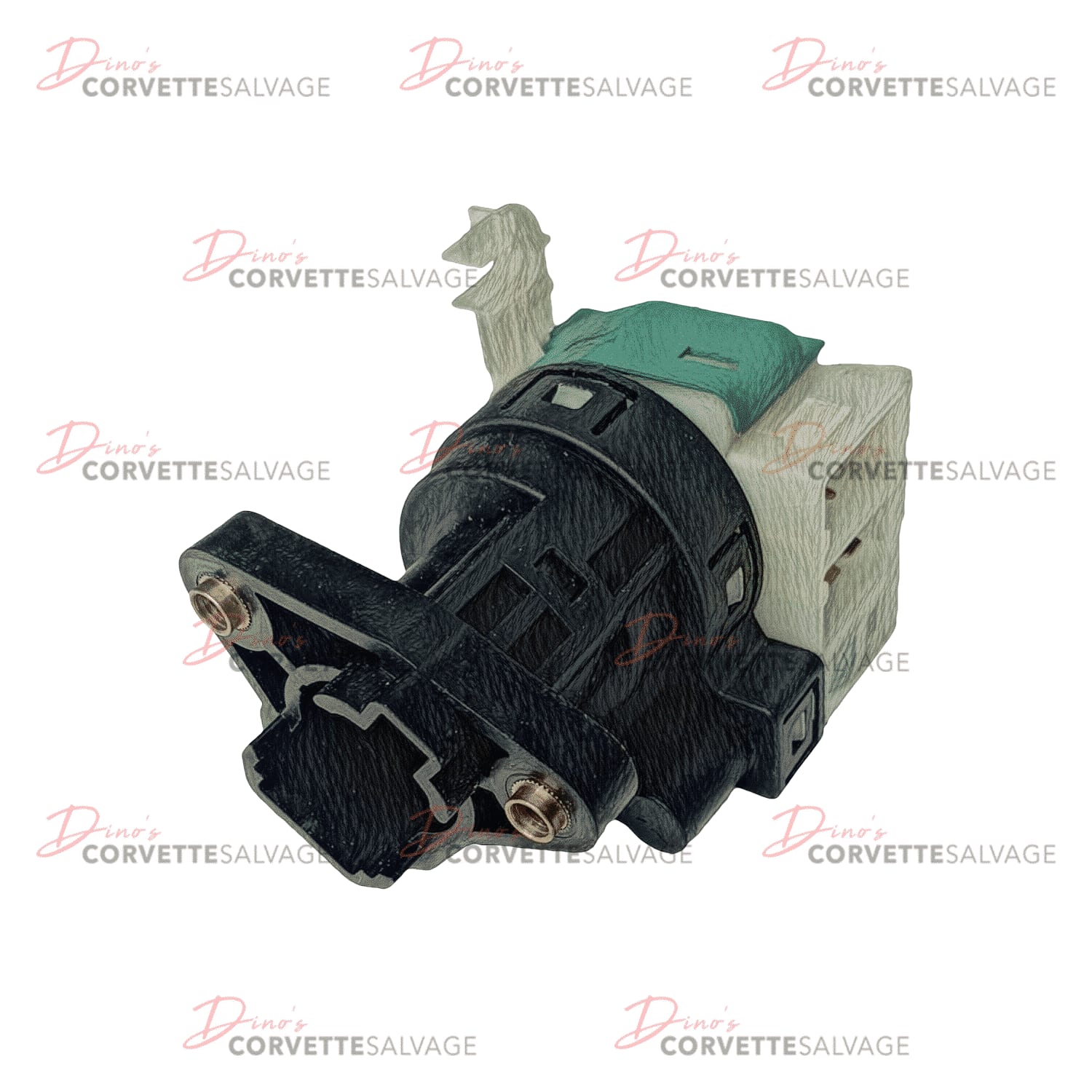
When you turn the key to START, the electrical switch on the steering column sends 12 volts out through the crank fuse in the instrument panel fuse block (in the passenger footwell). The switch is a separate part from the lock cylinder you put the key into. Inside it are sliding contacts held in place by small springs. Over 20-plus years, those springs weaken and the contacts arc and burn, so the START circuit may connect some of the time and not others. The two large harness connectors that plug into the switch are another weak spot. If their female terminals spread open, the connection can come and go with heat and vibration.
The Clutch or Park/Neutral Switch
From the fuse, the crank signal has to pass through the interlock switch. On a manual car, that is the clutch pedal switch, and it only closes with the pedal fully down. On an automatic, it is the park/neutral position switch on the transmission, and it only closes in Park or Neutral. If the switch is worn or out of adjustment, the signal stops here.
The Theft Deterrent Relay and PASS-Key
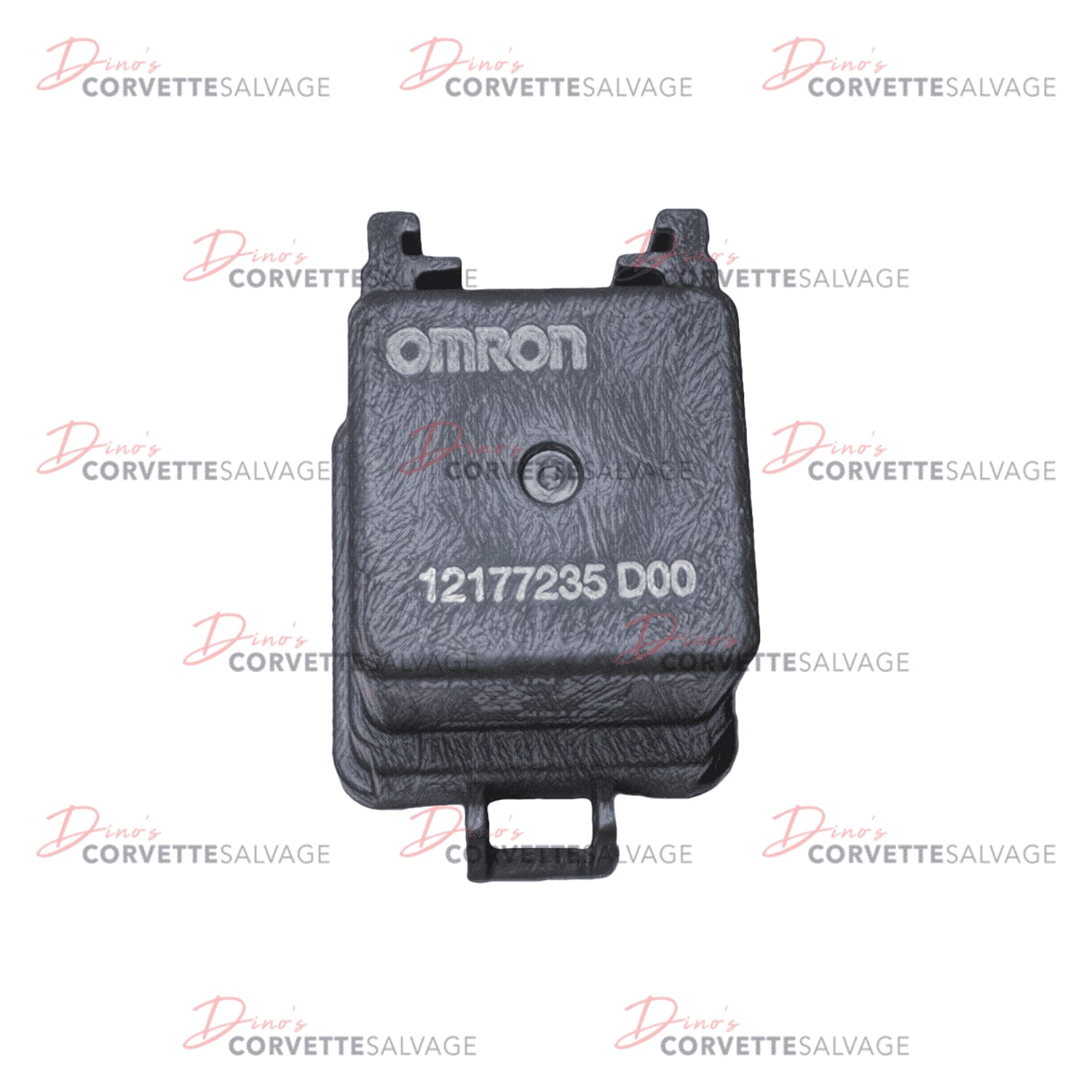
The crank signal then reaches the Theft Deterrent Relay, a plug-in relay mounted under the right side of the dash near the Body Control Module (BCM). This relay is the real "starter relay" on a C5. The crank signal powers one side of its coil. The BCM supplies the ground for the other side, but only after it reads a correct key.
C5 keys use the PASS-Key system. There is a small resistor pellet in the key blade, and GM used 15 different resistance values. Contacts in the lock cylinder read the pellet, and the BCM compares that reading to the value it has learned. If it matches, the BCM energizes the Theft Deterrent Relay, tells the column lock to unlock, and sends a fuel-enable message to the engine computer. If it doesn't match, the car won't crank or run, and the system goes into a tamper lockout of roughly three minutes with the SECURITY light on.
When the relay closes, it connects the heavy fused battery feed to the wire that runs to the starter solenoid. That is what actually spins the starter.
The Starter, Battery and Grounds
The last link is the high-current side: the battery, the positive and negative cables, the engine and body grounds, and the starter itself. The C5 battery sits under the hood on the driver's side, and the starter is on the passenger side of the engine, low and close to the exhaust. A loose or corroded cable end, or a weak ground, can let the dash light up fine while the starter gets too little current to turn.
Where the Column Lock Fits In
The electric steering column lock is part of the same theft system. If the BCM can't confirm the column has unlocked, it won't allow cranking, and you'll usually see "Service Column Lock" on the Driver Information Center. That has its own causes and fixes, so if you see that message, go to our C5 Corvette Steering Column Lock guide first.
How to Diagnose It
You'll want a digital multimeter, a test light, and ideally a scan tool that can read body (B) codes. The trick with an intermittent problem is to test during a failed crank, so be ready to probe when it acts up.
Step 1: Start With the Battery and Cables
Check the simple things first, because low voltage causes all kinds of strange behavior. A healthy, fully charged battery should read about 12.6 volts at rest. Have a helper crank the engine while you watch the meter. If the voltage falls well under 10 volts, charge or test the battery before you go any further. Then look at both cable ends for corrosion, loose clamps, and green crust under the insulation. With the meter set to volts, check the drop across each cable (one probe on the battery post, one on the far end of the cable) while cranking. More than about half a volt across any one cable or ground means that connection needs cleaning or replacing.
Step 2: Read the Security Light and Codes
Watch the SECURITY light when you turn the key. If it stays on or flashes and the car won't crank, the BCM may not be accepting the key. Scan for codes:
| Code | What It Means | What It Points To |
|---|---|---|
| B2721 | Key resistance read, but it isn't the learned value | Wrong key, worn key pellet, or BCM needs a relearn |
| B2722 | PASS-Key circuit shorted to ground | Key-reading wiring, lock cylinder contacts or connector |
| B2723 | PASS-Key circuit open or shorted to voltage | Dirty or loose key/cylinder contacts, connector or wiring |
| P1626 | Engine computer lost the theft fuel-enable signal | Usually cranks but won't start (not a no-crank) |
If you see these codes, try your spare key and clean the key blade's pellet contacts. If the system has locked you out, leave the ignition on and wait for the SECURITY light to stop flashing, which takes roughly three minutes. Disconnecting the battery won't reset it. Our C4 to C5 Corvette VATS key decoding guide explains how to measure key resistance, and the full code list is in our C5 Corvette DTC guide.
Step 3: Rule Out the Interlock Switch
On an automatic, try to start the car in Neutral with your foot on the brake. If it cranks in Neutral but not in Park, the park/neutral switch is worn or out of adjustment. On a manual, push the clutch pedal all the way to the floor. Check that the floor mat isn't stopping the pedal short and that the switch is still clipped into its bracket.
Step 4: Listen for the Theft Deterrent Relay
Have a helper turn the key to START while you hold a finger on the Theft Deterrent Relay or listen under the passenger-side dash. Owners on the CorvetteForum often use this as the first real split in the diagnosis:
- No click: the relay isn't being energized. The problem is upstream: the ignition switch, the crank fuse, the interlock switch, or the BCM isn't grounding the relay because of a key or column-lock issue.
- Click, but no crank: the relay is getting its command. The problem is the relay's contacts, its socket, the wire to the starter, or the starter and cables.
Step 5: Check Crank Voltage at the Fuse
Find the crank fuse in the instrument panel fuse block in the passenger footwell. It is listed as fuse 14 (CRK, 10A) on the 2002 wiring diagram, but check the label on your fuse block cover. With a test light grounded, probe both sides of the fuse while a helper holds the key in START.
- No voltage during START: the ignition switch, its connectors, or the wire from the switch to the fuse is at fault. Try wiggling the two large connectors on the ignition switch during a failed crank. If the car suddenly cranks, you've found it.
- Voltage present: the switch is doing its job. Next, check for 12 volts at the relay's crank-signal wire (usually solid yellow) during START. If you have voltage at the fuse but not at the relay, the clutch or park/neutral switch, or its wiring, is open.
- Voltage at the relay's crank-signal wire but no click: the BCM isn't completing the relay's ground. Go back to the key, PASS-Key codes, and column lock.
Step 6: Test the Relay Output and Starter Signal
If the relay clicks but the starter doesn't turn, check for 12 volts on the heavy wire that runs from the relay socket to the starter solenoid (usually purple) during START.
- Voltage on that wire, starter doesn't turn: check the starter's small signal terminal, the battery cable at the starter, and the engine ground. If those are good, the starter or solenoid is likely bad.
- No voltage on that wire: the relay's contacts or socket are bad. Pull the relay and inspect the socket terminals for corrosion or heat damage. Water can get into this area if the cowl and windshield drains are clogged.
The heavy red wire in the relay socket is a constant battery feed with its own fuse, listed as fuse 52 (60A) on the 2002 wiring diagram. If that wire has no voltage at all, check that fuse before anything else.
A common forum test is to briefly jump the relay socket's heavy red feed to the purple starter wire with the car in Park or Neutral. If the engine cranks, the starter, cables and grounds are good, and the fault is on the control side. Be careful: this bypasses every safety interlock. Set the parking brake, make sure an automatic is in Park and a manual is in Neutral, and keep clear of the engine. The engine will not start this way if the key isn't accepted, because the BCM also controls fuel.
| What You Found | Most Likely Cause |
|---|---|
| Low voltage or big voltage drop while cranking | Battery, cable ends or grounds |
| SECURITY light on, B2721-B2723 codes | Key, lock cylinder contacts or PASS-Key wiring |
| "Service Column Lock" message | Steering column lock (separate guide) |
| Cranks in Neutral but not Park | Park/neutral position switch |
| No voltage at crank fuse during START | Ignition switch or its connectors |
| Voltage at fuse, none at relay crank-signal wire | Clutch or park/neutral switch or wiring |
| Relay clicks, no voltage to starter wire | Theft Deterrent Relay or its socket |
| Voltage to starter wire, no crank | Starter, starter cable or engine ground |
Fix Options Compared
If a part is out of stock, join its waitlist and we'll let you know when one comes in.
1. Replace the Ignition Switch
If the fuse test points to the switch, replacement is usually the best fix. The current GM part is 10308321 (ACDelco D1499C), which replaced the earlier 10246848 and fits all 1997-2004 C5s. The switch comes without the lock cylinder, so you keep your original cylinder and keys. Before you buy, check the harness connectors. If their terminals are loose, a new switch alone may not cure the problem, and the terminals need to be tightened or replaced.
- Used ignition switch: a good used GM 10308321.
- New ignition switch: new reproduction.
Replacing the switch means removing the lower steering column trim. Disconnect the battery first. The C5 has a driver airbag, so follow the service manual and don't probe or unplug the yellow airbag connectors.
2. Replace the Theft Deterrent Relay
If the relay clicks but doesn't send power to the starter, or doesn't click even with voltage and ground at its coil, replace it. It plugs in, so this is the easiest and cheapest fix on this list. Clean the socket while you're there.
- Used theft deterrent relay: GM 12177233 or 12177235. GM lists the two as interchangeable, and GM now supplies both as 19118886.
3. Replace the Clutch or Park/Neutral Switch
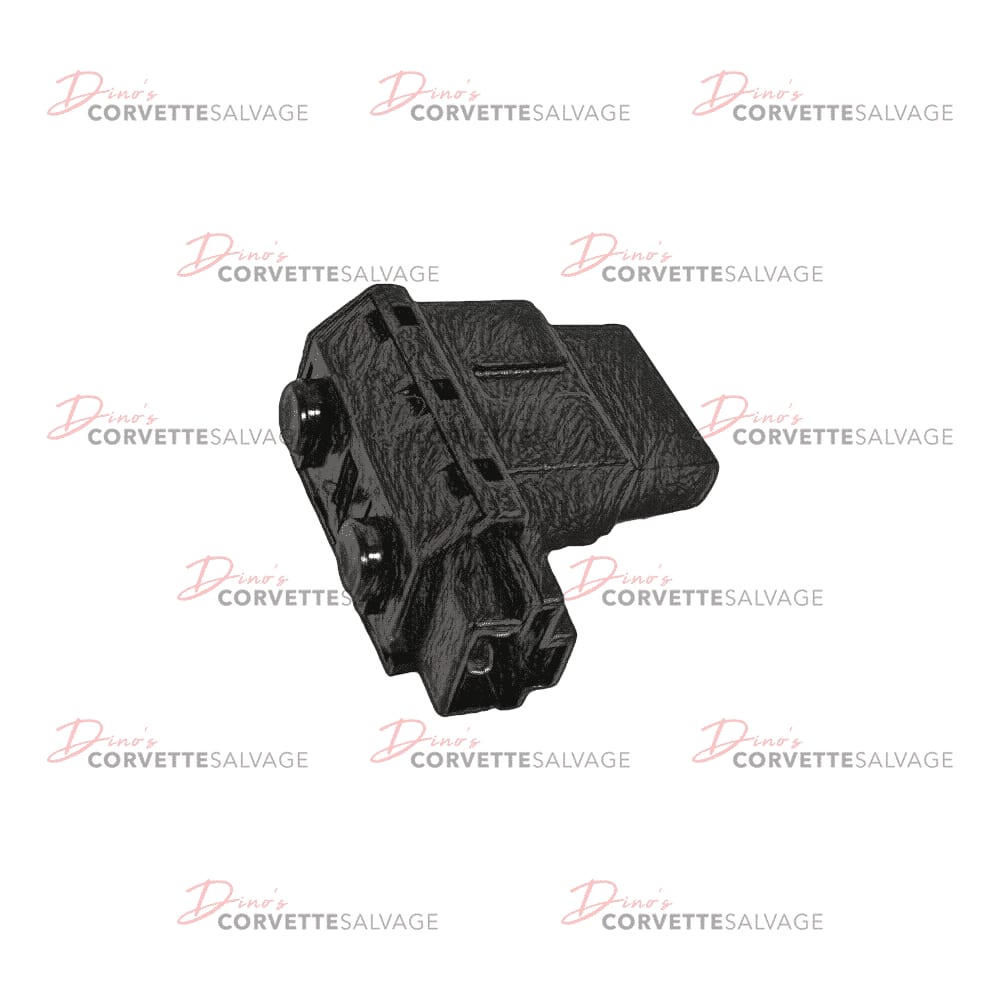
On a manual, the clutch pedal start switch is GM 14094368 (ACDelco D2214A). It's an inexpensive part that clips onto the pedal bracket.
On an automatic, the park/neutral position switch also runs the backup lights. If the car starts in Neutral but not Park, try adjusting the switch before replacing it. It has to be aligned with the shifter in Neutral, so follow the service manual.
- New park/neutral switch: automatic (4L60-E) cars only.
4. Fix the Battery, Cables and Grounds
This is often free or close to it. Clean the battery posts and cable ends, tighten the side-post bolts, and clean the engine-to-body and battery grounds back to bare metal. Replace any cable that's swollen, corroded under the insulation, or failed the voltage-drop test.
- Used negative battery cable: 1997-2003.
- Browse more battery parts.
5. Replace the Starter
If the solenoid gets 12 volts during START but the starter doesn't turn, or it only clicks, the starter is the likely problem. Some owners find a tired starter acts up mostly when the engine is hot, because it sits close to the exhaust. Make sure the battery and cables pass Step 1 first, since a weak battery can look exactly like a bad starter.
- Remanufactured starter
- Browse all starters.
6. Key, Lock Cylinder or BCM Problems
If the PASS-Key codes keep coming back, try a different key and clean the key blade. A worn key can be replaced with a new blank of the same resistance value. If the BCM itself has failed, a replacement BCM must be programmed to your car and learn your key.
- PASS-Key key blank: available in resistor values #2 through #15.
- Used C5 BCM
- BCM reflashing service: wipes a used BCM so it can be programmed to your car.
See our guide to programming a reflashed C5 BCM for the relearn steps.
Which Fix Should You Choose?
Start with the cheapest and easiest checks, and let the tests point you to a part instead of guessing:
- Charge and test the battery, and clean the cable ends and grounds. It costs almost nothing.
- Try Neutral on an automatic, or push the clutch fully down on a manual.
- Listen for the Theft Deterrent Relay. It's an inexpensive plug-in part, and its socket is easy to inspect.
- If there's no voltage at the crank fuse during START, replace the ignition switch and check its connectors.
- Replace the starter only after you've proven it gets 12 volts and good grounds and still won't turn.
If the SECURITY light or "Service Column Lock" message is involved, deal with the key or column lock first, because no starter or switch will fix a theft-system lockout.
Frequently Asked Questions
Why Does My C5 Crank Some Days and Not Others?
Intermittent no-crank is usually a worn ignition switch contact, a loose connector pin, or a relay contact that works when it's cool and fails when it's hot. Heat and vibration change those connections, which is why the problem comes and goes.
Can a Bad Ignition Switch Cause a No-Crank With All the Lights On?
Yes. The switch has separate circuits for RUN and START. The RUN contacts can be fine, so the dash and accessories work, while the START contacts are worn and don't send the crank signal.
Where Is the Starter Relay on a C5 Corvette?
The relay that powers the starter is the Theft Deterrent Relay. It's under the right (passenger) side of the dash, near the Body Control Module and the instrument panel fuse block.
Will Disconnecting the Battery Reset the Security Lockout?
No. The PASS-Key tamper lockout keeps counting after a battery disconnect. Leave the key on with a known good key and wait for the SECURITY light to stop flashing, which takes about three minutes.
Should I Bypass the PASS-Key System?
We don't recommend it. A bypass can hide a wiring problem and removes your theft protection. Most no-crank problems are fixed with a switch, relay, key or connector repair.
Is "Service Column Lock" the Same Problem?
No. It also stops the car from cranking, but it has its own causes and fixes. See our C5 Corvette Steering Column Lock guide.
Related Guides
- C5 Corvette Steering Column Lock: Symptoms, Recall & Fixes
- C4 to C5 Corvette VATS Key Decoding Guide 1986 to 2004
- Guide to Programming a Reflashed C5 Body Control Module
- C5 Corvette Diagnostic Trouble Codes (DTCs) & Descriptions
- C5 Corvette On-Board Diagnostics, Explained
- C5 Corvette Buyer's Guide (1997-2004)
Looking for something else? Browse our relays and switches or ignition parts, or call or text 888-467-8388 and we'll help you find the right part.
Sources
- GM service information for the 1997-2004 Corvette: Vehicle Theft Deterrent / PASS-Key description and operation, PASS-Key diagnostic codes, theft deterrent component locations, and starting and charging wiring diagrams.
- GM parts catalog listings for the ignition switch (10308321), clutch pedal start switch (14094368) and theft deterrent relay (12177235).
- 1997-2004 Corvette owner's manual, starting the engine.
- General diagnostic ideas from C5 owner discussions on CorvetteForum, including the relay "click test," fuse and relay socket voltage checks, and ignition switch connector issues.